AI agents for small business just moved from demo to product. On 29 September, Meta expanded its Muse agent to small businesses, and on 8 October Google said its agentic Gemini will reach business customers first. Unlike a chatbot, an agent connects to your tools and works towards a goal. That is useful, and risky if you switch it on without a plan.
What these agents actually do
Muse is free with usage limits and plugs into tools such as Shopify, Canva, Notion, Klaviyo, Stripe and QuickBooks, plus your Instagram analytics, Facebook page and Meta ad account. Meta says it learns what you sell, how your brand sounds and what customers ask most. Google's Gemini agent takes a goal, plans the steps and uses your connected systems. The coverage we read does not confirm India availability for Muse, so check your own Meta Business account before planning around it.
Do this: List the three tools your team already uses daily. Those are the integrations worth connecting first, nothing more.
Start with low-risk, repeatable work
Agents shine at drafting, summarising and reporting: weekly ad performance notes, product descriptions, customer FAQ replies, content calendars. They are weaker where a wrong move costs money or reputation, such as publishing, refunds or budget changes. Our look at Meta's AI business assistant showed the same pattern: great for first drafts, not for unsupervised decisions.
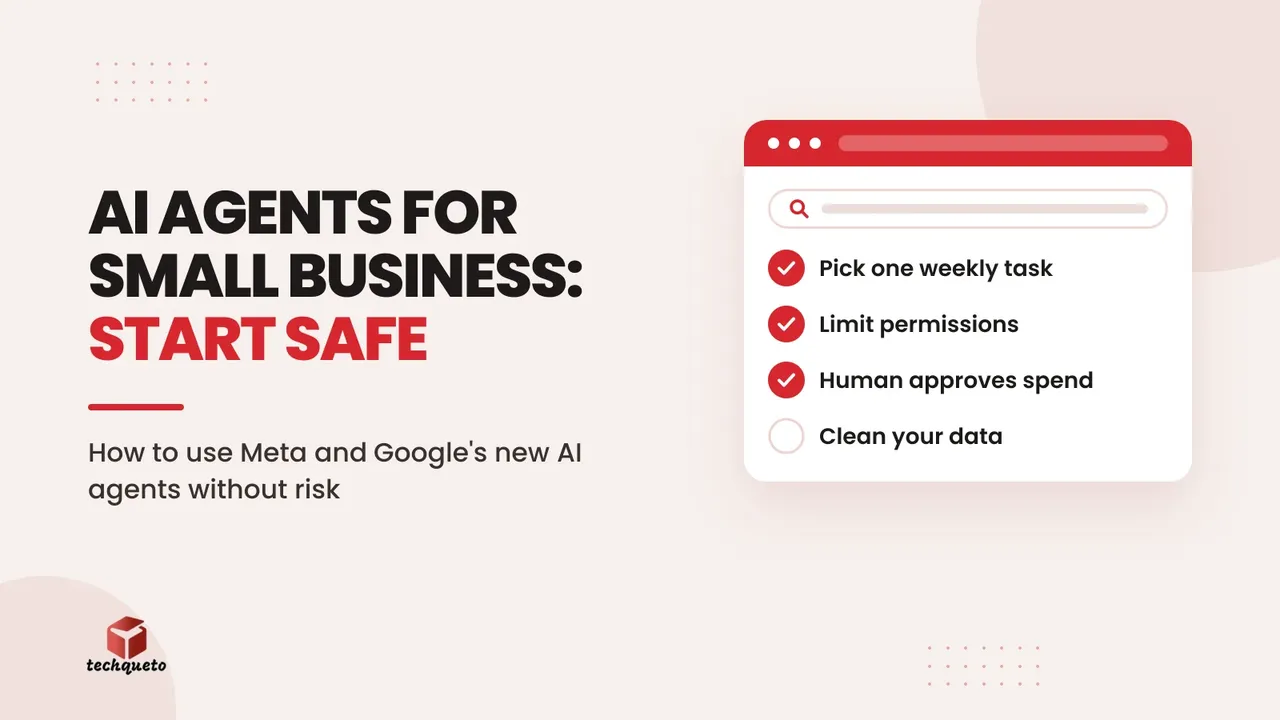
Do this: Pick one weekly task, run the agent on it for a month, and compare its output with your manual version before expanding.
Keep a human on spend, publishing and customers
The reporting we found on Muse did not describe approval controls in detail, so assume nothing. If an agent can touch your ad account, it can also overspend it. Give it read-only access to analytics first, and keep budget changes, public posts and customer-facing messages behind your own approval.
Do this: Use a separate login with the minimum permissions, and review the agent's activity once a week like you would a new hire's work.
Fix your own data so agents have something good to work from
An agent is only as good as what it reads. Messy product feeds, outdated pricing or thin website copy produce confident but wrong output. The same clean structure also helps AI shopping assistants find you, which we covered in how to get products found by ChatGPT and Google AI Mode.
Do this: Audit your top 20 products or services pages for accurate prices, clear descriptions and consistent brand wording before connecting any agent.
The bottom line
Agents will soon sit inside the tools you already pay for, whether you ask for them or not. The businesses that benefit will be the ones that start small, limit permissions, keep approvals human and feed the agent clean information. Treat it as a fast junior assistant, not a replacement for judgement.
Need help with this? Get in touch with Techqueto — we build and grow websites for 100+ brands across India and the UAE. Ready to get started? Get started here.