Google's Gemini 3.8 Flash is now generally available, and the headline is price: $0.75 per million input tokens and $3.75 per million output tokens. For anyone running Gemini 3.8 Flash for business automations, such as lead qualification, ad-copy drafts or support triage, that looks like an easy win. It mostly is, but there are two catches worth knowing before you move your workflows.
1. The price is introductory
Those rates apply until 31 December 2026. From 1 January 2027 the standard price doubles to $1.50 input and $7.50 output per million tokens. The model also offers a 1M-token context window and up to 64k tokens of output, and it is the third Flash release in roughly three months. Google's own Gemini API documentation lists both price tiers. If your cost model assumes today's rate, rebuild it with the 2027 numbers.
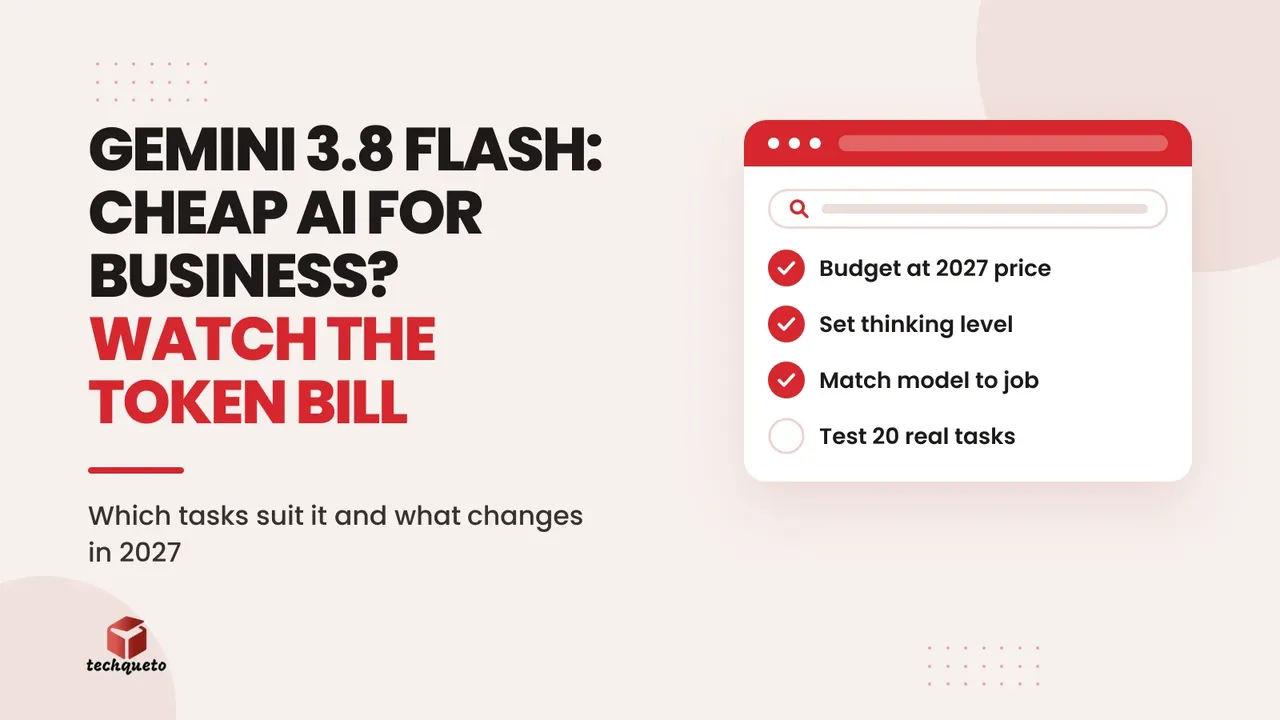
Do this: Budget every automation at the January 2027 price, and treat the next three months as a cheap testing window.
2. Cheaper per token is not cheaper per task
Flash works harder than earlier versions: it takes smaller reasoning steps, calls tools repeatedly and checks its own work. Google notes this can use more tokens on complex jobs. A model that is half the price but uses twice the tokens saves you nothing. It also has low, medium and high thinking levels, with medium as the default, so you can dial effort down for simple jobs.
Do this: Set the thinking level to low for routine work like tagging leads or rewriting headlines, and only raise it for multi-step tasks.
3. Match the model to the job
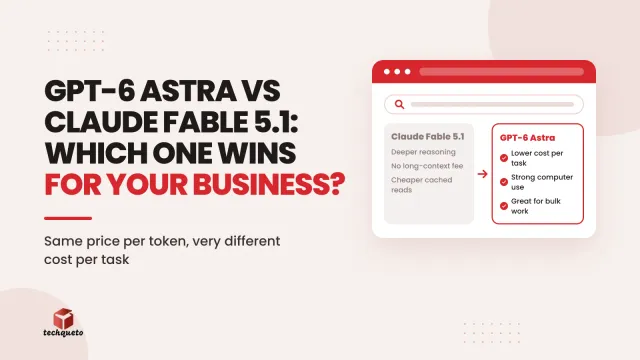
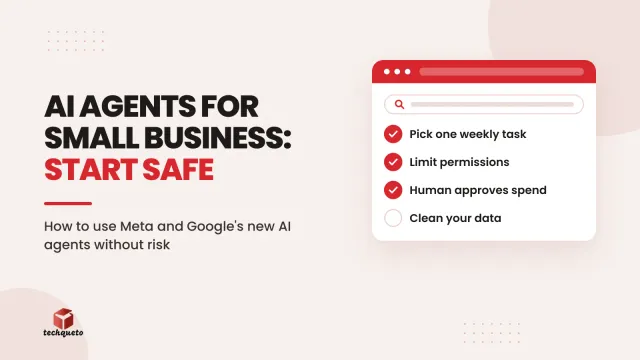
A Flash-class model suits high-volume, well-defined work: sorting enquiries, drafting ten ad variants, summarising call notes, first-pass reports. Keep a stronger model for client-facing strategy, sensitive wording and anything where one wrong answer is expensive. We compared the bigger models in our GPT-6 Astra vs Claude Fable 5.1 breakdown, and our guide to AI agents for small business shows where agents fit in a team.
Do this: Run 20 real tasks from your own workflow through two models, then compare cost per finished task and how many needed a human fix.
4. Check your code before switching
Moving from an older Flash is not a drop-in swap. Google's migration notes say to replace thinking_budget with thinking_level and remove parameters such as temperature, top_p and top_k. An existing automation can fail quietly if you skip this.
Do this: Test in a staging copy of your workflow first, and log token usage per run from day one.
The bottom line
Gemini 3.8 Flash is a strong, low-cost engine for routine business automation, provided you measure cost per completed task rather than per token and plan for the 2027 price. Pick the cheap model for volume, the stronger one for judgement, and let your own test results decide.
Need help with this? Get in touch with Techqueto — we build and grow websites for 100+ brands across India and the UAE. Ready to get started? Get started here.