Shoppers on Amazon India no longer only type keywords. They ask Rufus, Amazon's AI shopping assistant, things like "which mixer grinder is good for dosa batter under ₹5,000?" and buy from whatever it suggests. With Diwali on 8 November, Amazon Rufus optimisation is now a practical part of listing work, not a future trend. Analysts at Canopy Management found only about 22% of Amazon's top search results overlap with what Rufus recommends, so ranking high in classic search does not guarantee you get mentioned.
Amazon has not published Rufus's recommendation rules, so treat what follows as best practice drawn from what sellers and analysts have observed. Keywords still get you into the pool; listing quality decides whether Rufus picks you.
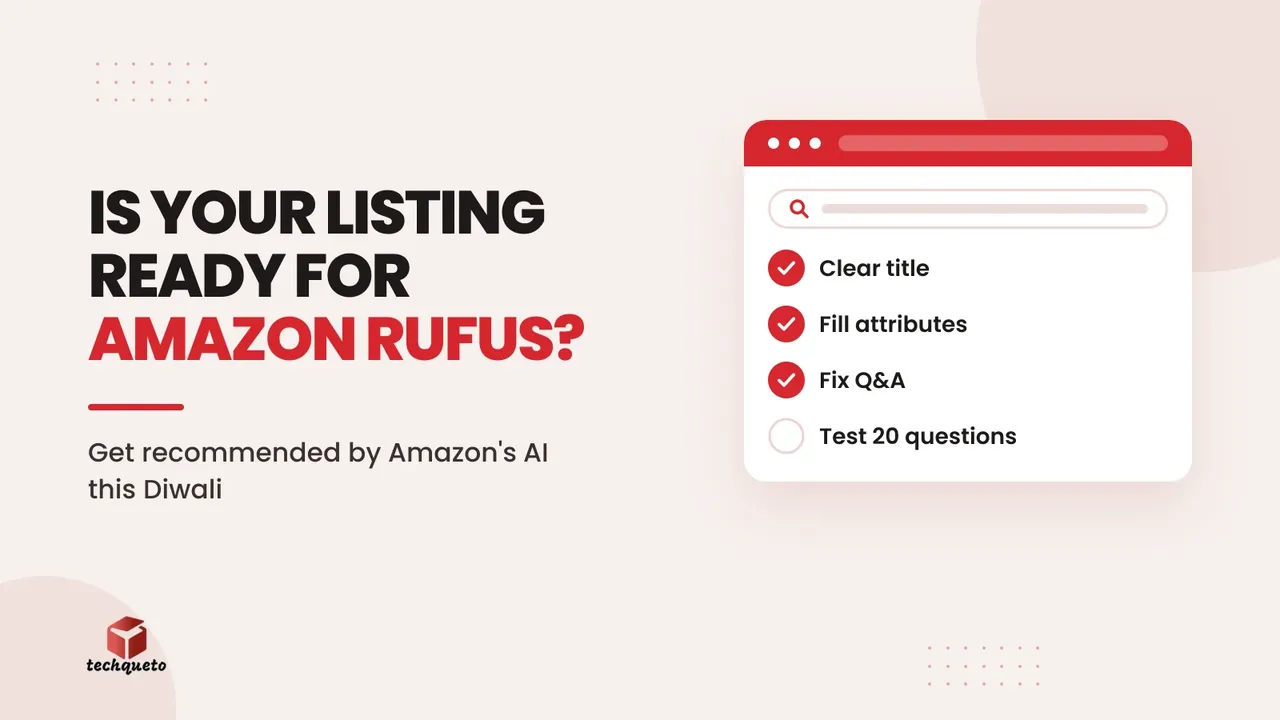
1. Write titles and bullets that answer questions
Rufus reads your listing the way a shopper would. A keyword-stuffed title gives it little to work with. Use a clear noun phrase: the product, its key modifiers and who it is for. Then open each bullet with a concrete, checkable fact, add a number, name the use case, and settle one common doubt.
Do this: Rewrite the bullets on your top five ASINs so each one answers a real buyer question, such as capacity, compatibility, gifting suitability or warranty.
2. Fill every attribute and remove conflicts
Blank backend attributes are missed chances to be matched to a shopper's intent. Conflicting details are worse: if the title says 1L, a bullet says 750ml and the A+ image says 700ml, both shoppers and AI get confused. Also remember that text which appears only inside an image may go unread.
Do this: Download the Category Listing Report from Seller Central, fill every relevant blank attribute with specific values (for example "school lunch" rather than "daily use"), and make sure your title, bullets, attributes and A+ content all agree.
3. Use reviews and Q&A as your source material
Rufus draws on the catalogue, customer reviews and community Q&A. Analysts also report that it tends to avoid products rated below 4 stars. That makes your three-star reviews your best research: they show exactly which doubts stop people buying.
Do this: Read your last 30 three-star reviews, fix the repeated complaints in the listing, and answer pre-purchase doubts in Q&A with numbers where possible. Never offer discounts or gifts for reviews, as that breaks Amazon policy and risks penalties like those in our guide to Amazon and Flipkart seller penalties.
4. Test your Amazon Rufus optimisation before the festive rush
Seller Central does not report Rufus traffic separately, so you have to test it. Ask Rufus 20 buyer-style questions about your products, from two or three accounts since answers are personalised, and log every wrong, vague or missing answer. Fix those gaps, then repeat the test. Our post on getting products found by AI shopping agents covers the same thinking for ChatGPT and Google AI Mode.
Do this: Run your 20-question test this week and fix the conflicts first, before you spend more on festive ads. Shoppers are already using Rufus to compare prices and find deals during the sale, as Business Today reports.
The bottom line
Rufus rewards clear, consistent, genuinely helpful listings, which is also what converts human shoppers. Fix the basics now and you gain both ways. And because marketplaces keep changing the rules, it is worth owning a store of your own too: see why in D2C website vs marketplace.
Need help with this? Get in touch with Techqueto — we build and grow websites for 100+ brands across India and the UAE. Ready to get started? Get started here.